
Already in the 1990s, St John Paul II had expressed his sorrow at the Gulf War. On 16 January 1991 at the end of the Rosary in the Hall of Blessings, the Polish Pontiff raised a long prayer for peace in which he repeated several times: ‘Never again war’. Years later, after the attack on 11 September, Pope Wojtyla asked for a day of fasting and prayer on 14 December to plead for ‘a stable peace, founded on justice’, ‘adequate solutions to the many conflicts that trouble the world’.
Pope Benedict XVI at the Angelus on 1 October 2006 invited people to ‘pray the Rosary [...] for peace in the world’. Dwelling on the situation in Iraq, he expressed his ‘spiritual closeness’ and invited ‘all to join me in asking Almighty God for the gift of peace and concord for that tormented country.’
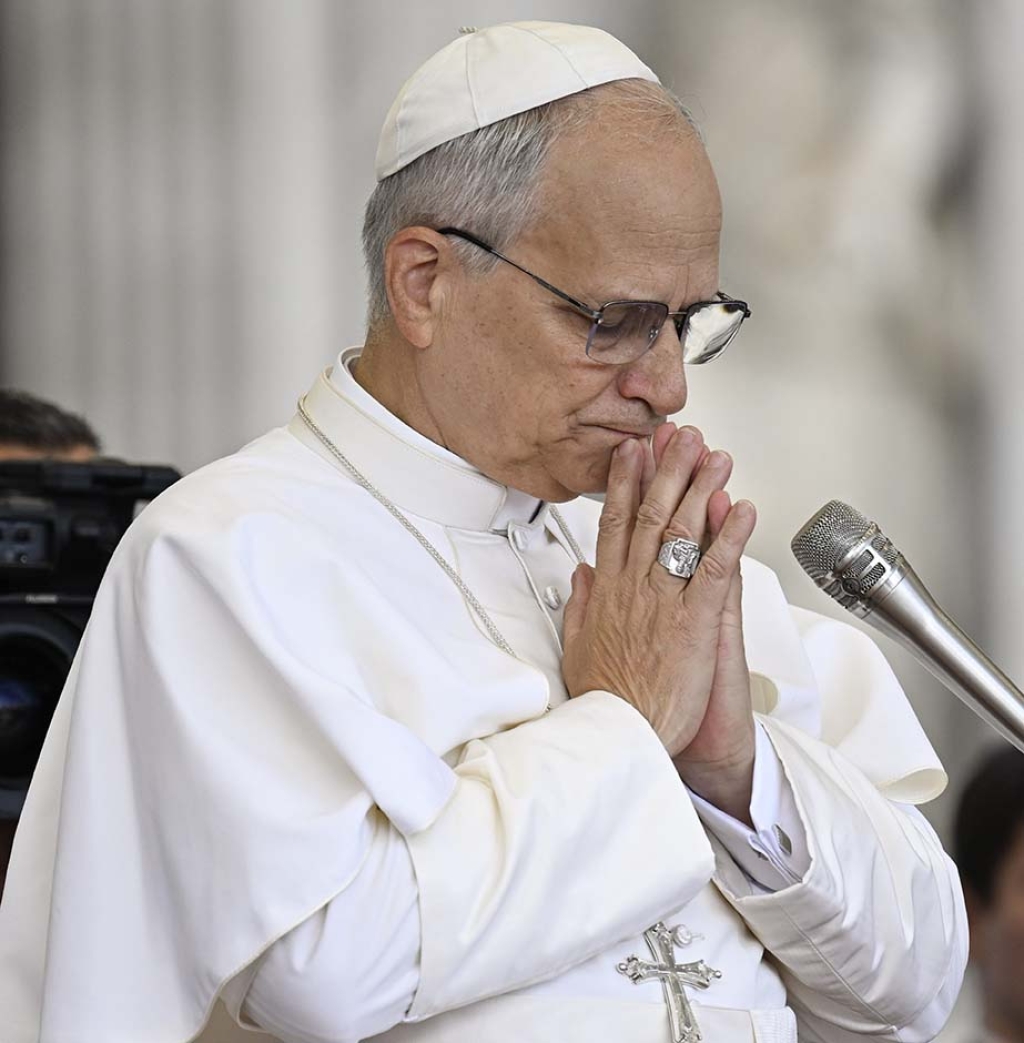
And then Pope Francis, who during his pontificate prayed unceasingly for peace. It was on 7 September 2013 when he asked for prayers for Syria, the Middle East and the world. Since then, the most torn and suffering scenarios on earth have become the focus of a communal and heartfelt prayer. After Syria, it was the turn in 2017 to pray for the Democratic Republic of Congo and South Sudan, in 2020 the prayer for Lebanon, plunged into a serious political, social and economic crisis aggravated by the explosion in the port of Beirut. A year later it was the turn of Afghanistan, following the return to power of the Taliban, and then in 2022 of the “tormented Ukraine”, still ravaged by a war that knows no respite. It was then on 6 October 2024, the day before the first anniversary of Hamas' terrorist attack on Israel, when Pope Francis in the Basilica of St Mary Major, in front of the Salus Popoli Romani, said the Rosary for peace in the world, addressing a heartfelt supplication to the Virgin Mary.
Source: Vatican News
