

The Arrival of the Salesians: A New Dawn for Education in Goa
In 1946, Goa witnessed the arrival of the Salesians of Don Bosco, marking the beginning of a new chapter in its history. Fr José Luis Carreño and Fr. Aurelius Maschio approached Dom Jose da Costa Nunes, the Patriarch of the East in Goa, seeking permission to establish a Salesian mission in the territory. The Patriarch enthusiastically welcomed their proposal, declaring:"Not only permission, but I am waiting for the Salesians with open arms."
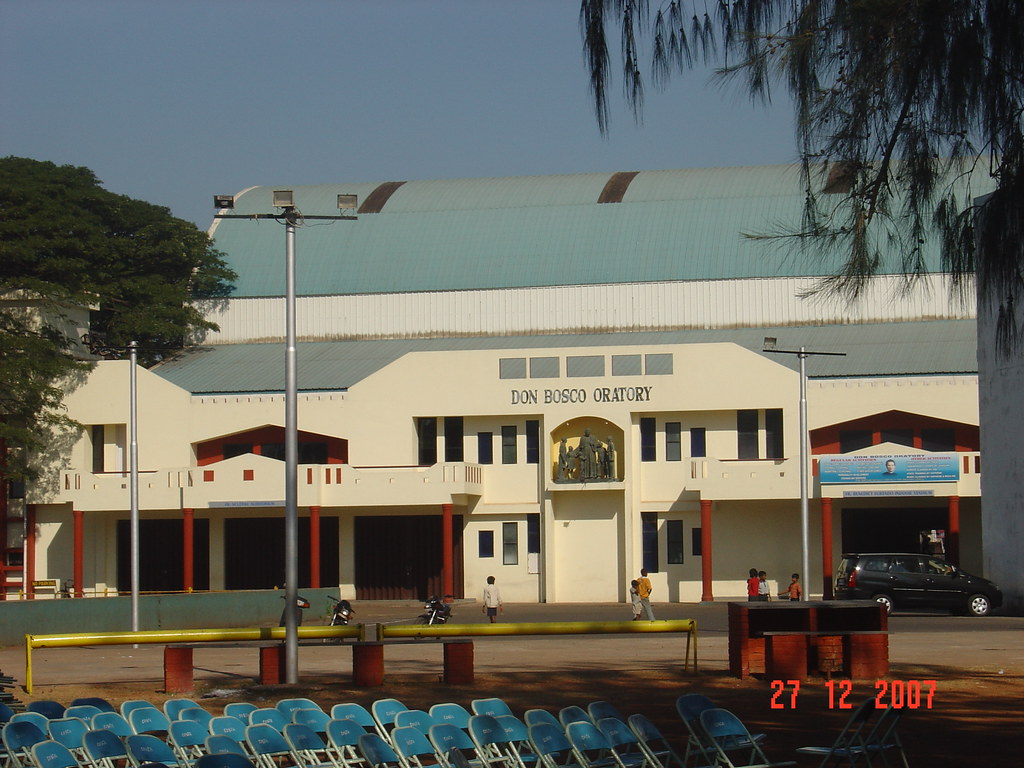
Fr. Vincent Scuderi, who had endured six years in internment camps during World War II, was chosen to lead this ambitious mission. On April 5, 1946, Fr. Scuderi arrived in Goa and established the Oratorio Salesiano Don Bosco. With just a football and a warm smile, he began engaging the local youth in a manner that perfectly embodied Don Bosco’s philosophy of education through presence, love, and joy.
The Early Years: Building Foundations
Fr. Scuderi was soon joined by Brother Cajetan Lobo and skilled Sicilian carpenter Mr. Giovanni Bellassai, who helped introduce carpentry training for local boys. This marked the beginning of the Salesians' vocational training programs in Goa, combining academic education with practical skills development. By October 1946, six more Salesian priests arrived, further accelerating the mission's growth.
Within months, the mission had achieved remarkable milestones:
– A daily oratory welcoming 150 boys.
– The establishment of a Portuguese primary school.
– Boarding facilities for 15 residents.
– A chapel to cater to the spiritual needs of the community.
The arrival of Brother Francis Medaglia introduced tailoring classes, further enriching the curriculum. By June 1947, the Salesians opened an English school with 36 students, many of whom were dropouts – a testament to their commitment to reaching marginalized youth.
Expansion and Growth: A Permanent Home
In August 1948, after extensive negotiations and financial support from the Portuguese government and the Patriarch, the Salesians purchased 44,000 square meters of land. This secured a permanent home for their mission, which continued to expand under the leadership of visionary directors.
Key developments during this period included:
– The establishment of a printing press, producing the monthly magazine "Oratorio Salesiano" and the weekly Konkani publication "Aitarachem Vachop".
– A cement block-making machine in 1950, offering additional vocational training opportunities and generating income for the institution.
– Boarding facilities accommodating 300 boys, many of whom came from disadvantaged backgrounds.
Adapting Through Political Transition
The Salesian mission demonstrated resilience during the political transition following Goa's annexation by India in December 1961. Although the Portuguese school had to close, the Salesians continued their work through the English medium school, ensuring uninterrupted education for the youth.
Milestones of the 1970s and Beyond
The 1970s marked significant developments for the mission:
– Construction of the Shrine of Our Lady of Fatima, funded by Fr. Aurelius Maschio.
– Relocation of the Don Bosco Technical School to Fatorda in celebration of the Salesians' silver jubilee in Goa.
– Establishment of a night school for working students, later expanded to include Higher Secondary education in 1986.
Administrative progress mirrored these achievements. The Goa Salesian Society was registered as a charitable trust in 1973, and the region was reorganized as the Konkan Delegation in 1999. It was elevated to a Vice Province in 2003, and finally, the Province of Panjim (INP) was officially established in 2007, with St. Joseph Vaz as its patron and Fr. Loddy Pires as the first provincial.
Currently, the province spans across:
– Maharashtra: Kolhapur, Ratnagiri, Sangli, and Sindhudurg districts.
– Goa: The entire state.
– Karnataka: Belgaum, Bagalkot, Dharwad, Gadag, Haveri, North Kanara, South Kanara, and Udupi districts.
The 19 houses of the Panjim Province serve six dioceses: Sindhudurg, Belgaum, Karwar, Udupi, Mangalore, and the Archdiocese of Goa-Daman.
A Testament to Don Bosco’s Legacy
Through the decades, the Province of Panjim has remained true to Don Bosco's vision of holistic education – one that nurtures intellectual growth, moral values, practical skills, and spiritual development. Whether through their schools, technical institutes, or community outreach programs, the Salesians have consistently worked to uplift marginalized youth and empower them to become good citizens and conscientious human beings.
Conclusion: A Legacy of Hope and Service
Today, the Province of Panjim stands as a shining example of educational excellence and unwavering commitment to youth development. Its history is a testament to the transformative power of faith, education, and community building. As the Salesians continue their mission, they uphold the values of St. John Bosco, inspiring generations to lead lives of purpose, service, and hope.
 Title
Title
Title
Title
 Title
Title
Title
Title
 Title
Title
Title
Title
 Title
Title
Title
Title
 Title
Title
Title
Title
 Title
Title
Title
Title
 Title
Title
Title
Title
 Title
Title
Title
Title
 Title
Title
Title
Title
 Title
Title
Title
Title
 Title
Title
Title
Title
 Title
Title
Title
Title
 Title
Title
Title
Title
 Title
Title
Title
Title
 Title
Title
Title
Title
 Title
Title
Title
Title
 Title
Title
Title
Title
 Title
Title
Title
Title
 Title
Title
Title
Title
 Title
Title
Title
Title
 Title
Title
Title
Title
https://www.infoans.org/en/component/k2/item/23999-rmg-sdb-province-the-saint-joseph-vaz-province-of-india-panjim-inp#sigProIdac2c1d5f9f
