

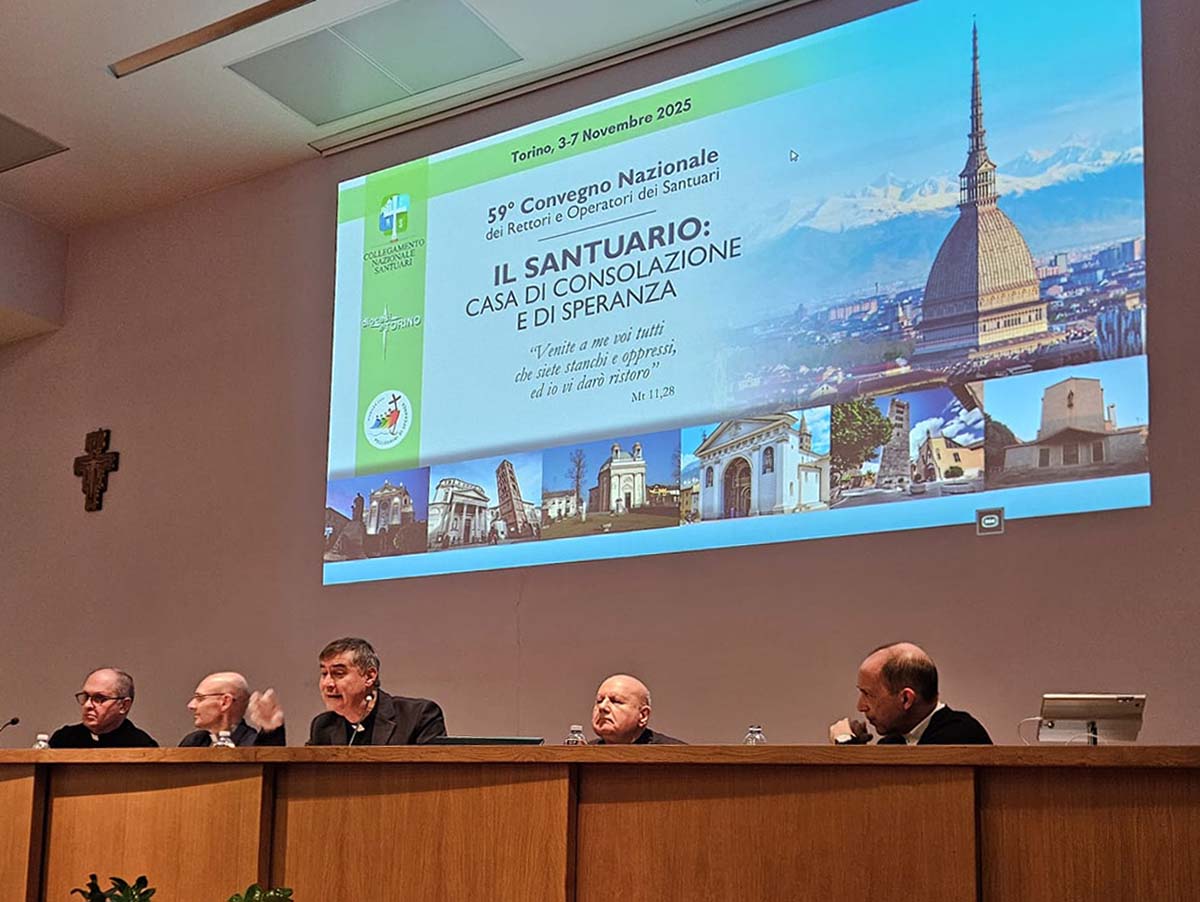
In the context of the general theme of the conference - ‘The Shrine: House of Consolation and Hope. Come to me all you who are weary and oppressed, and I will give you rest’ - the Salesian's reflection focused on the specifically Salesian theme of the youth dimension, and in particular hardship, highlighting the opportunities that Italy's shrines have to contribute to providing meaningful and effective responses.
His address offered a broad analysis of the conditions that mark the lives of the new generations today, in a cultural and social context that has changed profoundly compared to the past. Fr Sala identified some of the main anthropological challenges affecting the way young people live their identity and build their future: the relationship with the body and with affectivity, the search for truth in a fragmented world, the effects of digital culture, disaffection with institutions and, at the same time, the desire for participation and community. To these is added the growing spiritual restlessness and the difficulty of making mature vocational choices in a time marked by uncertainties and profound relational fragility.
Alongside the cultural challenges, Fr Sala outlined a picture of the emerging poverties in the youth situarion: not only financial, but also cultural, affective and relational, and spiritual and religious poverty.
His address, however, did not just list the challenges, but from a fully Salesian perspective turned to hope, presenting in conclusion the ‘many reasons to hope’, highlighting how, by their intrinsic nature, shrines can and must become spaces for welcoming, listening to and accompanying young people.
He invited participants to question themselves on the role of shrines in their relationship with young people and to ask themselves to what extent these sacred places are able to offer paths of reconciliation, dialogue and personal growth. In his closing and provocative rmearks, Fr Sala invited the participants to reflect on what the challenges most present in the youth population of their own area are; the symptoms that make them manifest and problematic; and what the initiatives, already in place or feasible, to provide answers, could be.
In particular, the Salesian invited us to think about the shrine as a place where young people can feel welcome without being judged, and where they can have a direct experience of God's mercy; his final provocative challenge concerned the ministerial service of Reconciliation and the ways to improve and spread it further.
Subsequent discussion enriched the session, with speeches and clarifications highlighting the need for shrines that are increasingly open to the demands of young people and attentive to the new forms of poverty in our time.


https://www.infoans.org/en/sections/news/item/26025-italy-young-people-and-social-hardship-the-shrine-as-a-house-of-consolation-and-hope#sigProId861936ccf8
