
The total number of pilgrims
In total, more than 33 million pilgrims from 185 different countries came to Rome for the Jubilee, exceeding the forecasts made on the eve of the event, as commented by Archbishop Rino Fisichella, pro-prefect of the Dicastery for Evangelization and the Vatican's representative responsible for the Jubilee.
The official count of participants—33,475,369 pilgrims—was made possible by a technological system installed at the Holy Door of St Peter's Basilica, where a camera recorded daily passages.
For the other three papal basilicas (St John Lateran, St Mary Major, and St Paul Outside the Walls), the count was carried out using proportional estimates and the support of volunteers with manual counters. In addition, data from official registrations and participation in major events were taken into account.
Origins
As for the places of departure of the “pilgrims of hope,” at the continental level, Europe takes the lion's share (62.63%), followed by North America (16.54%), South America (9.44%), and Asia (7.69%). Smaller numbers came from Oceania (1.14%), Central America and the Caribbean (1.04%), Africa (0.95%) and the Middle East (0.46%).
At the national level, Italy leads the ranking with over a third of the total (36.34%), followed in the top ten by the United States (12.57%), Spain (6.23%), Brazil (4.67%), Poland (3.69%), Germany (3.16%), the United Kingdom (2.81%), China (2.79%), Mexico (2.37%), and France (2.31%). There were also significant numbers of visitors from Argentina, Canada, Portugal, Colombia, Australia, and the Philippines.
The planned calendar and unexpected events
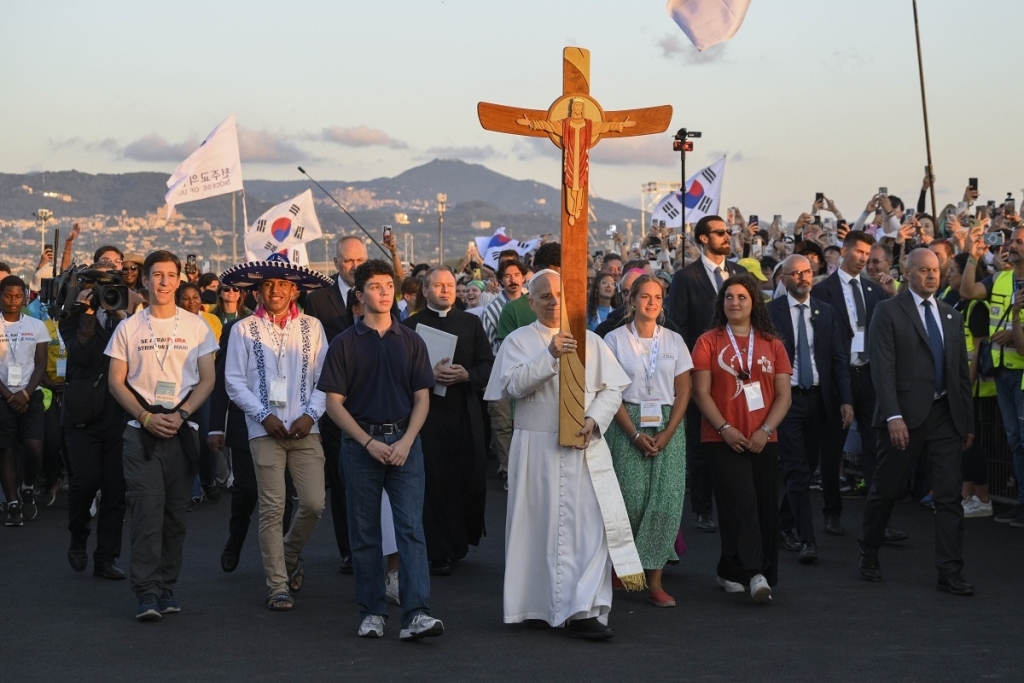
The entire Holy Year was dotted with special events dedicated to particular categories such as families, young people, the elderly, Eastern Catholics, catechists, healthcare workers, artists, teenagers, athletes, and more. In most cases, these were special weekends, with the Jubilee for the world of communication leading the way on 24-26 January 2025 (on the feast day of the patron saint of journalists, St Francis de Sales) and ending with the Jubilee for prisoners on 14 December. A total of 32 special themed events took place, among which the Jubilee for Young People stood out. With its longer duration (July 21-August 10) and the enthusiasm that marked it, it recorded an impressive 13 million passages through the Holy Doors.
During the Jubilee, three other unplanned events of global significance also took place: the funeral of Pope Francis (26 April 2025), the subsequent Conclave and the election of the new Pontiff (8 May 2025), which were integrated into the Jubilee calendar, attracting a total of almost 4 million pilgrims and renewing global attention on the Jubilee event.
Not only that: after the election of Pope Leo XIV, there was an unexpected but well-managed increase in the influx of pilgrims. Rome, in the international spotlight for a whole year, managed to meet the challenge thanks to institutional collaboration and organisational skills.
The “Jubilee method”
During the press conference, the Mayor of Rome and Special Commissioner for the Jubilee on the Italian side, Roberto Gualtieri, highlighted the concrete legacy left by the Jubilee: 332 infrastructure projects, of which 204 have already been completed or are at an advanced stage, using over 75% of the allocated resources: €1.725 billion.
Finally, the validity of the collaboration established between the various administrations was also emphasised, leading the Mayor of Rome to coined the term “Jubilee method” to indicate fruitful cooperation between the parties.
