
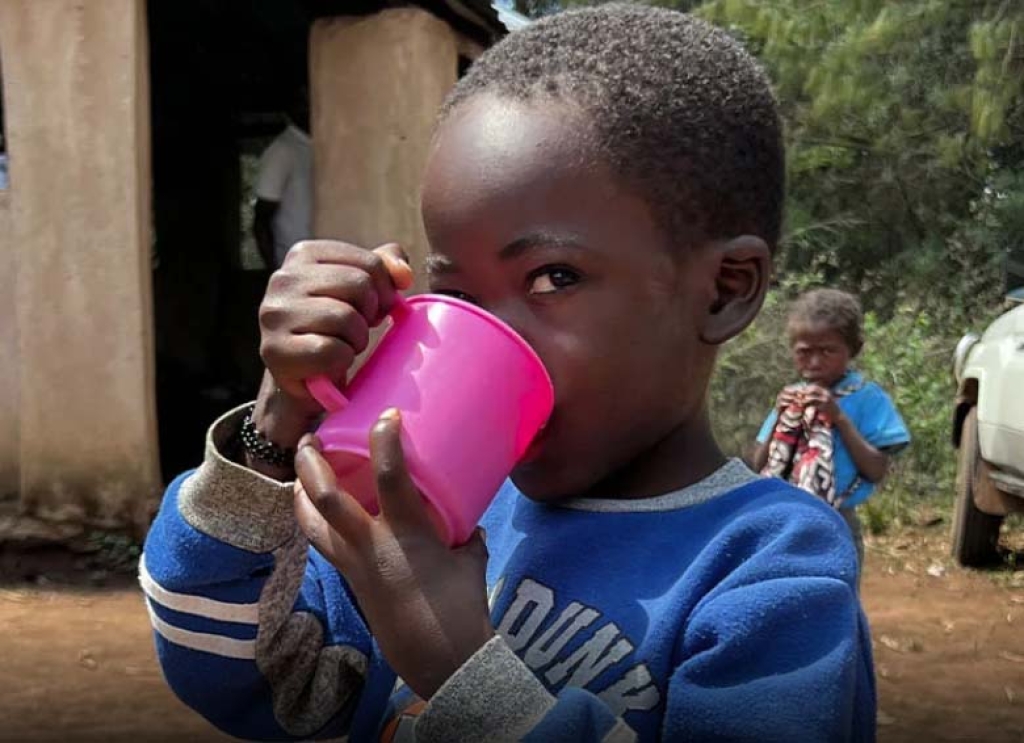
Across the globe, the Salesians are promoting projects in various countries to facilitate access to clean and safe water in vulnerable communities, thereby improving the living conditions of thousands of people.
Every 22 March since 1993, the United Nations has celebrated World Water Day to highlight the importance of this essential resource and draw attention to the plight of millions of people who still lack access to drinking water. The theme for this year’s Day is “Where water flows, equality grows”, because the global water crisis affects us all, albeit unequally. Where access to safe drinking water and sanitation is problematic, inequalities are exacerbated and it is women and girls who suffer the most from the consequences.
Today, more than 2.2 billion people lack access to safe drinking water, whilst around half the world’s population suffers from water scarcity for at least part of the year. Furthermore, around 1,000 children under the age of five die every day from diseases linked to the use of contaminated water – a tragedy that could be prevented with adequate infrastructure and better water management.
Although water covers around 70% of the planet’s surface, only a small proportion is suitable for human consumption. Pollution, climate change, population growth and armed conflicts are exacerbating an already critical situation in many regions of the world. The consequences of this scarcity affect children most of all. In many countries across Africa, Asia and Latin America, boys and girls have to walk several kilometres every day to fetch water – time that prevents them from attending school or studying.
Girls and women walk long distances to fetch water
Amina and Safiya, two Togolese girls aged 11 and 12 respectively, know this reality all too well. Every day they walk long distances to fill bottles holding up to 20 litres and carry them home – a task that affects their education and their future, because the lack of drinking water does not merely cause illness. This situation also impacts their food security, the family economy and, more broadly, the stability of entire communities.
“When it doesn’t rain, animals die, crops are lost and families are left without resources. The situation becomes critical, especially for newborns,” explain the Salesians in Chad, where increasingly frequent droughts are forcing many people to move in search of water.
Climate change, desertification and the pollution of water resources are increasing periods of drought in many regions of the world. If nothing is done, in the coming decades two-thirds of the world’s population could be living in countries with water scarcity.
Faced with this reality, Misiones Salesianas has been working for years to improve access to drinking water in vulnerable communities. In recent years, the Missionary Office has supported more than 25 water-related projects in 16 countries across four continents, with an investment of nearly half a million euros, benefiting over 300,000 people.
These projects include the drilling of wells, the installation of piped water systems, water treatment and the construction of sanitation facilities, which have improved the health and hygiene conditions of thousands of families.
Water projects that change lives and enable children to access education
In Togo, for example, the Salesians are supporting well-drilling projects in various rural communities. In the village of Kadjada, home to more than 1,300 people, the population relied on stagnant water or small dams that dried up during periods of drought. The installation of a borehole now provides access to drinking water and reduces diseases linked to the consumption of unsafe water.
A similar situation exists in the village of Sombone, a rural community of nearly 2,000 inhabitants located about 59 kilometres from Kara. There, many families obtain water from unsafe rivers or wells and must travel long distances to fetch it. The construction of a new well will improve the health of the population and facilitate permanent access to clean water. Also in Tchandida, another rural community in northern Togo, the Salesians are promoting a project to drill a well that will benefit over 1,300 people and improve the population’s hygiene and sanitation conditions.
In addition to ensuring access to drinking water, these projects include awareness programmes on hygiene and proper water management, as well as the establishment of local committees responsible for maintaining the infrastructure.
To this end, the Salesians continue to work to ensure that no child has to walk for miles every day to drink clean water, convinced that accompanying, protecting and educating also means guaranteeing something as fundamental as access to drinking water.
Source: Misiones Salesianas
