
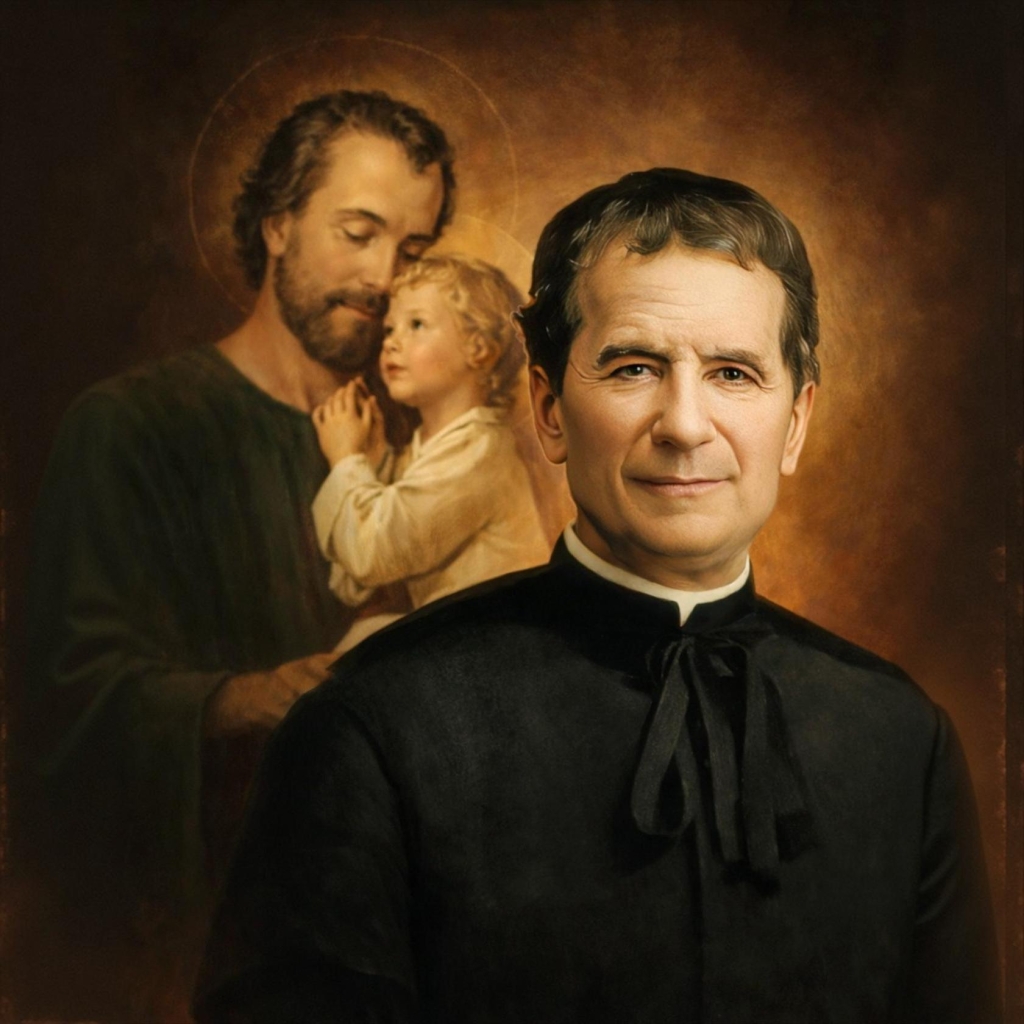
Don Bosco’s devotion and early practices
Historical studies on the development of the rule show that the first draft of 1858 did not yet mention Joseph, but by 1864 he appears in the litany of protectors as “the most chaste spouse of Mary” and patron of workers and artisans. This choice is deeply coherent with Don Bosco’s concern for the working classes of Turin and for the formation of lay collaborators, who would later become Salesian coadjutors.
The early Salesian Bulletin, started in 1877, often proposed novenas, stories and favours attributed to Saint Joseph, inserting his figure into the ordinary catechesis of the Oratory and the missionary appeals of the young Congregation. These pages reveal a practical devotion: Joseph is invoked to obtain work, to find housing, to protect families, to support the construction of churches and houses for the young; in short, he is the providential “administrator” of everyday needs.
Patron of workers and Salesian Brothers
Don Bosco, who learned from St Joseph Cafasso a pastoral style close to ordinary people, saw in Joseph the worker a powerful model for the boys of the oratories and for the Salesian Brothers. Later Salesian reflections underline that Don Bosco placed the Brothers in particular under Joseph’s protection, seeing in him the prototype of the consecrated layman: immersed in work, close to the poor, totally God’s.
Contemporary Salesian texts on the Brother vocation develop this intuition: Joseph teaches how manual labour, technical competence and professional seriousness can become places of contemplation and apostolate. The Brother, like Joseph, evangelises more by the quality of his presence, his honesty and his solidarity than by preaching, and he keeps alive in the Congregation the conviction that work is a privileged path of holiness.
A model proposed by the Rector Majors
Recent reflections, especially around the Year of Saint Joseph, have brought these themes together. One Salesian article summarises why “Don Bosco would present St Joseph as a model to the Salesians”: he is co‑worker with God, poor in spirit and rich in grace, a man who knows the toil of work, the weight of responsibility and yet remains open to hope. Joseph is portrayed as a man who could have become bitter in the face of frustration and the impossibility of realising his own plans, but instead allows God’s design to generate new life in him.
The Rector Majors frequently invite the Congregation to entrust vocations, communities and families to Joseph, especially in times of crisis or transition. In circular letters and talks they highlight three traits particularly dear to Don Bosco’s spirit: Joseph’s capacity to listen and decide, his industrious charity, and his tenderness, which guards without possessing. These traits make him a concrete support for Salesians who wish to live pastoral charity in the complexity of today’s world.
Salesian Family traditions around Joseph
Various branches of the Salesian Family have developed practices and catecheses that keep Joseph’s figure alive. The Salesian Sisters present him as educator of Jesus and guardian of the home of Nazareth, inviting educators to imitate his delicate, strong presence in their communities and schools. The Cooperators, in their Project of Apostolic Life, underline Joseph’s example for lay people immersed in secular realities, called to sanctify work, family and social commitments.
Popular devotions also continue: novenas, feasts, consecrations of families and communities to Saint Joseph, and pilgrimages to shrines dedicated to him within the Salesian world are regularly reported in Salesian news agencies and bulletins. These practices are not nostalgic survivals; they help the new generations to discover in Joseph a companion capable of understanding fatigue, uncertainty and the hidden heroism of everyday fidelity.
A Salesian rereading of Joseph for today
Drawing on this rich tradition, a contemporary Salesian rereading of Saint Joseph can highlight three accents. First, Joseph as worker, patron of those who labour in factories, offices, schools and digital spaces, reminding them that work is collaboration in God’s creative plan and a service to the poor. Second, Joseph as father, model of educational presence that combines firmness and tenderness, capable of introducing the young to freedom without abandoning them. Third, Joseph as man of hope, who in the face of crises, migrations and fragility does not surrender to resignation but continues to trust that God can make all things new.
In this way the Salesian Family can continue Don Bosco’s intuition: to entrust houses, works, communities, families and especially the young to Saint Joseph, asking him for the grace of a hidden but fruitful holiness that builds the Kingdom day after day, piece by piece, like a good carpenter at his bench.
