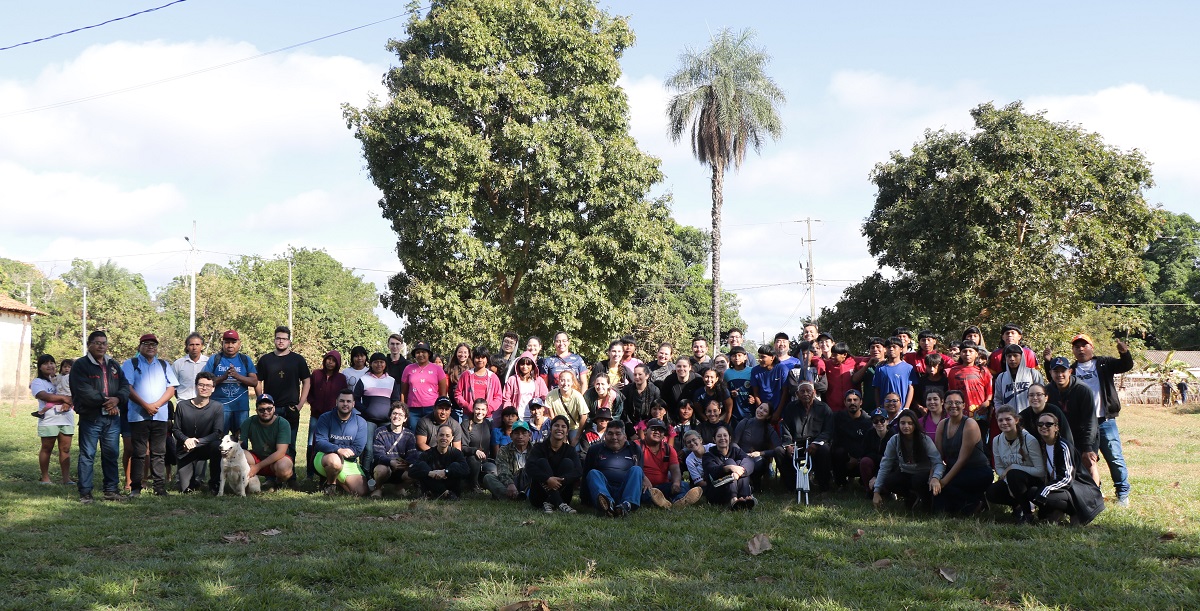
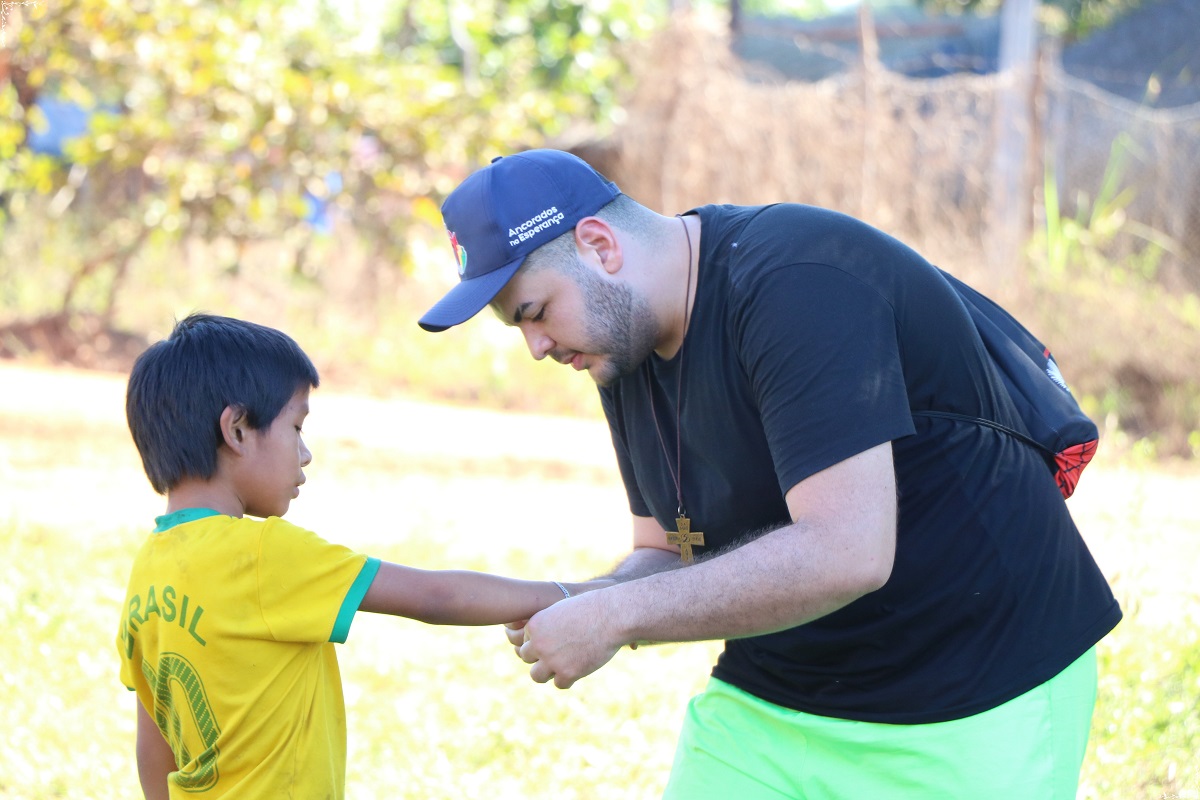
Even before departure, the volunteers, together with students from the Dom Luiz Lasagna Salesian College and the Capela São Domingos Sávio Salesian community, both in Araçatuba, mobilised thesmelves in various solidarity campaigns, collecting food, clothing, blankets, toys, milk and medicines. One of the most emblematic actions was the “Farmácia na Aldeia” (Pharmacy in the Village), coordinated by biomedicine student Louise Elias de Carvalho. The goal was to collect basic medicines to supply the Basic Health Unit (UBS) in the Xavante village of São Marcos. ‘We feel that it is a small effort compared to everything they experience and need, but it is an important step towards improving the well-being of the communities,’ said Louise.
In addition to collecting supplies, events such as hot dog sales also helped to fund the mission. The involvement of the students reflected the importance of the project, which goes beyond solidarity and becomes a space for comprehensive education.
CONTAGIOUS
For medical student Luiz Eduardo Castanhar Olsen, the experience was eye-opening. ‘I thought it would bring new experiences, show how we are in Araçatuba. And I realised that we are the ones who learn. They have so much more to teach us about unity, family, friendship and happiness. The joy is contagious. VAMS is about learning from them, not the other way around,’ he said.
Thaís Maria Ruas dos Santos, a 2nd-year Physical Education student, also experienced her first VAMS and was moved by the children's welcome. ‘Before I came here, I imagined quiet volunteer work, but I didn't think I would get so involved.’
‘The affection the children have for us is worth all the tiredness. I am very happy and hope to come back more often,‘ said Thaís. Pharmacy student Igor Landin Rodrigues de Souza described VAMS as a unique experience. ‘These are incredible moments, connections I didn’t expect, affection I didn't expect to give and receive. Only those who come to feel this understand what this energy is.’
REAL KNOWLEDGE
For Salesian Brother Tarley da Guia Nunes da Mata, who works in the São Marcos indigenous land, the mission goes beyond material donations: ‘It is important for students to have this personal contact with indigenous peoples. This encourages engagement, real knowledge of these cultures and a positive social view of others. It is a path of reconstruction, without idealisation, but with mutual respect and coexistence,’he explained. He also highlighted the impact on various aspects of the volunteers’ lives.’
‘Personally, professionally and spiritually, the fruits are immense. They realise that the children remember them, that there is a real bond. This matures and touches them deeply, especially when they discover the spirituality present in indigenous culture, which has its own way of seeing God and the world.’
Accompanying the mission, together with his Pastoral team and some teachers, the Pro-Rector of Pastoral Care, Fr Paulo Eduardo Jácomo, SDB, stressed that this is a campaign with a clear purpose and a genuine commitment. ‘The academics understand the meaning of solidarity and service. This mission transforms because it combines technical knowledge, human experience and spiritual growth,’ he concluded.
Monique Bueno
https://www.infoans.org/en/sections/news/item/25079-brazil-vams-promotes-solidarity-network-and-transforms-the-lives-of-academics-and-indigenous-people#sigProIdd1e3e6c1ab