A Parish at the “Existential Periphery”
Though situated in central Rome, Sacro Cuore inhabits what Pope Francis has often called an “existential periphery.” The area around Termini is marked by the presence of migrants, asylum seekers, and the homeless. Italian media at the time highlighted that the parish, run by the Salesians, was particularly active in assisting refugees and people without stable housing.
Francis’ choice of parish was therefore not incidental. From the beginning of his pontificate—signaled powerfully by his July 2013 visit to Lampedusa, where he denounced the “globalization of indifference”—he had made the defense of migrants a defining pastoral priority. The visit to Sacro Cuore must be read within this broader magisterial arc: a Church that refuses indifference and instead draws near.
Concrete Encounters: Faces, Not Categories
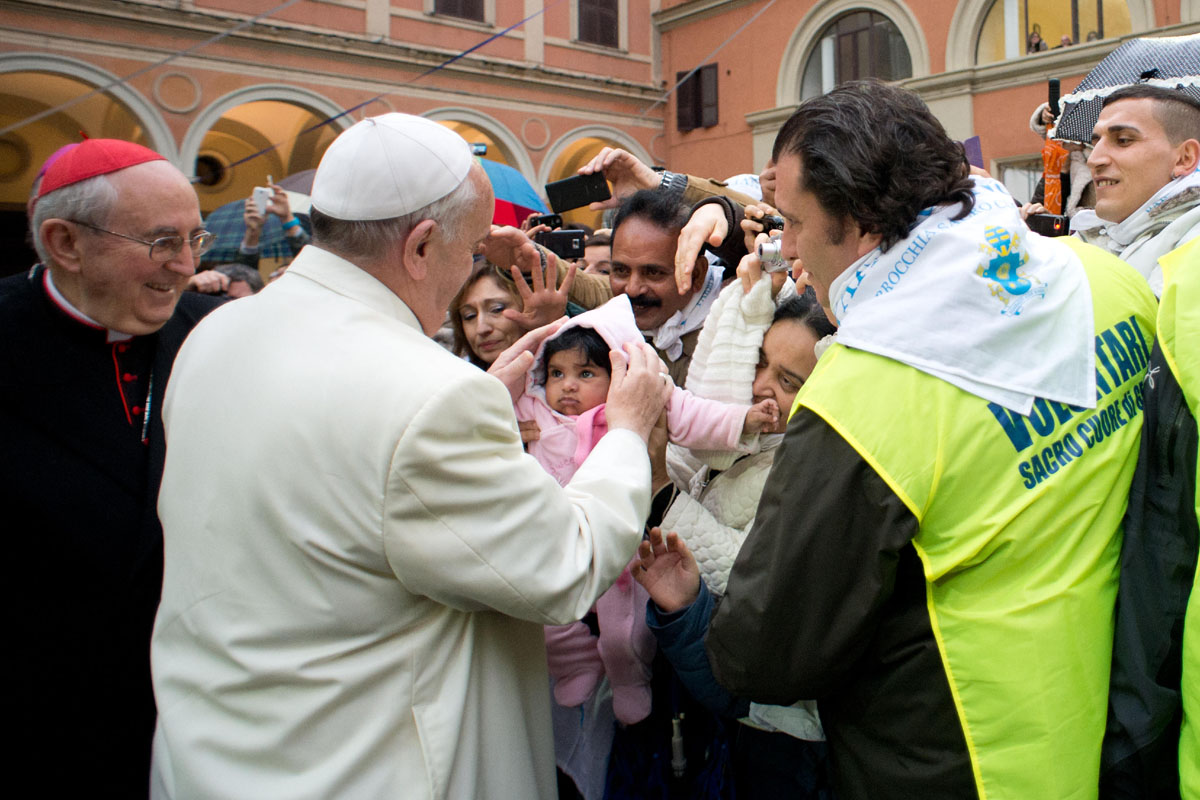
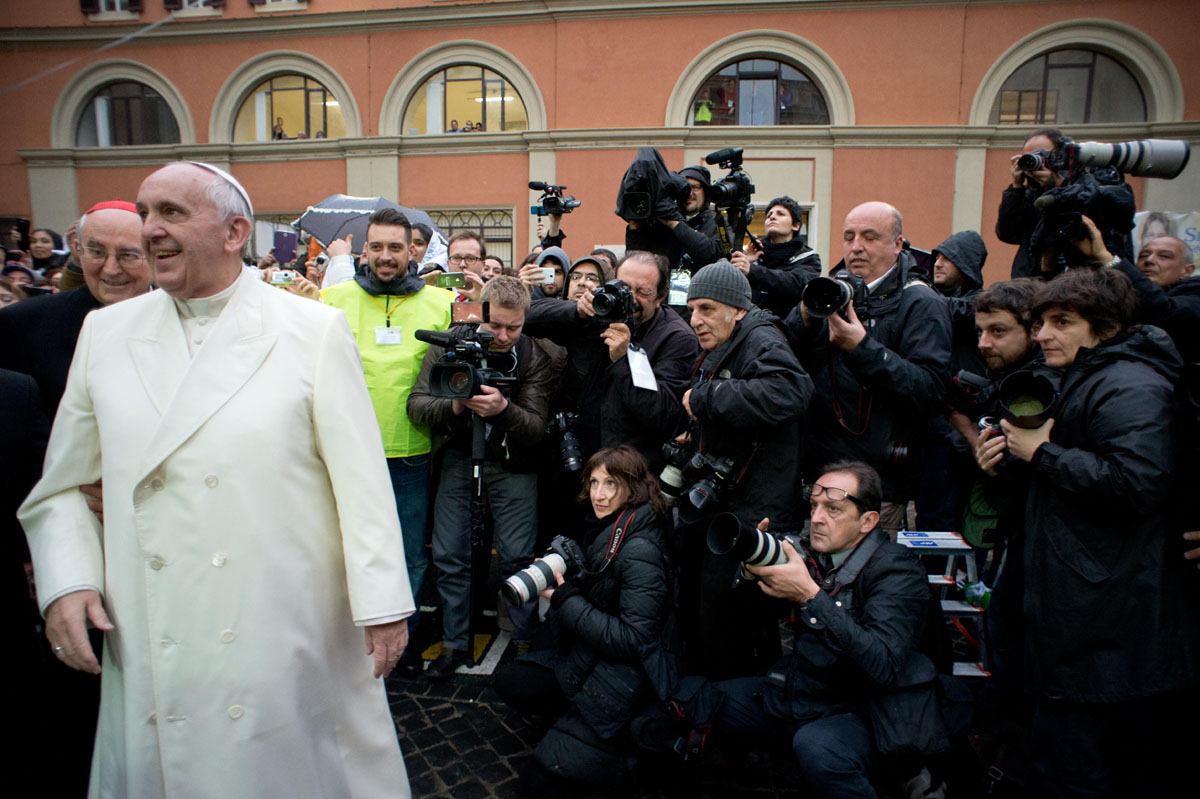
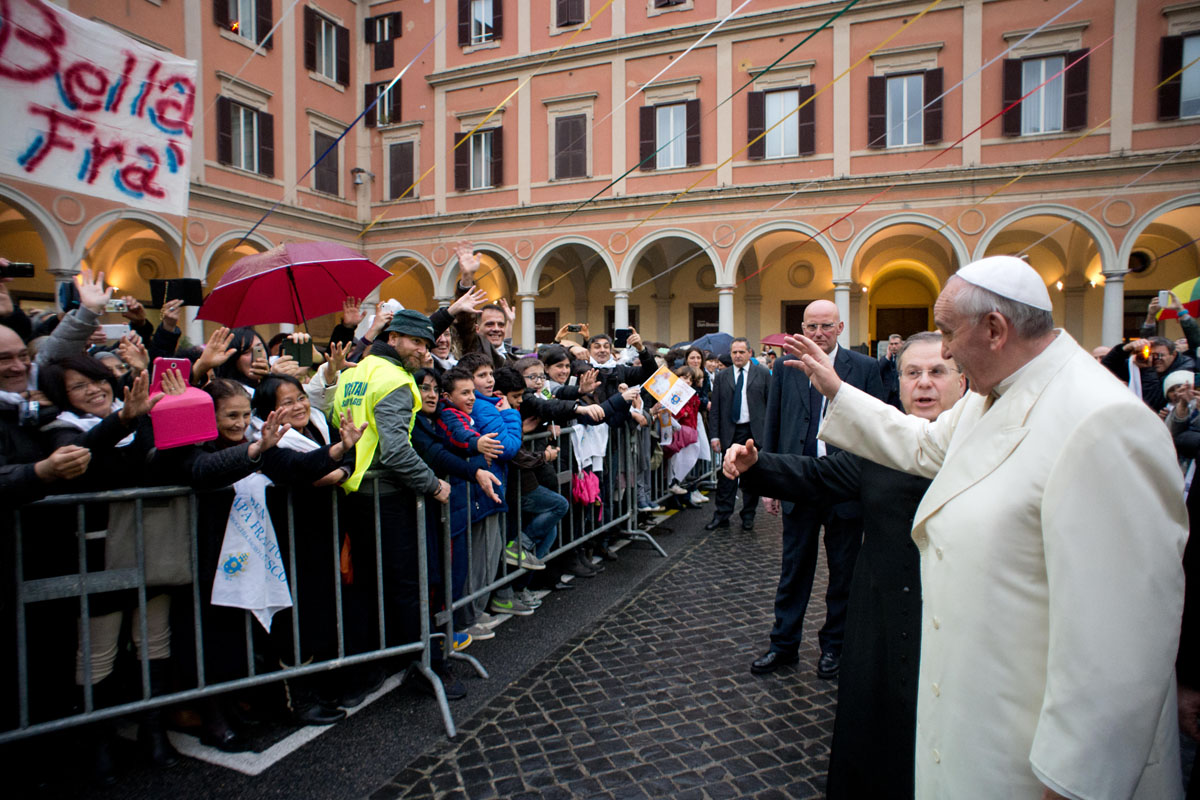
Before celebrating Mass, Pope Francis met privately with groups of migrants, refugees, homeless persons, and volunteers. Reports note that he greeted them personally and listened to their stories, asking them, as he so often does, to pray for him. Such exchanges were simple yet deeply theological: reciprocity replaced paternalism; the poor were not “objects” of charity but subjects of faith.
The Angelus address earlier that same day framed the pastoral horizon of the visit. Marking the World Day of Migrants and Refugees, Francis reminded the faithful that migrants are “close to the heart of the Church” and invited prayer for those living “in the most serious and difficult situations.” His physical presence in an “immigrant parish” near Termini made visible what he proclaimed from St Peter’s Square: the Bishop of Rome goes to meet his people where they live and struggle.
In continuity with his later message for the World Day of Migrants and Refugees, in which he would affirm that migrants and refugees have “a special place in the heart of the Church,” the 2014 visit embodied a pastoral conviction: the Church enlarges her heart when she welcomes the stranger.
A Kerygmatic homily: The Lamb who takes away sin
If his gestures spoke socially, his homily spoke evangelically—clear, simple, and centered entirely on Christ. Preaching on John 1:29, Francis repeated the Baptist’s proclamation: “Behold, the Lamb of God, who takes away the sin of the world.”
He dwelt on the paradox of the Lamb: weak, meek, and gentle—yet bearing the weight of the world’s sin. Jesus conquers not through force but “with love” and “with meekness.” In words that resonated deeply in a parish serving the wounded of the city, he insisted that Christ takes upon himself “all our sins,” even those we feel are too heavy to carry.
The Pope contrasted the trust we readily place in doctors or institutions with the trust we often withhold from God, urging the faithful: “Trust in the Lord… He never disappoints. Never, never!” Addressing young people directly, he repeated this assurance, presenting confidence in Christ as “the key to success in life.” The tone was unmistakably Salesian: Christ close to the young, Christ who does not disappoint.
He concluded with a contemplative invitation: to close one’s eyes, imagine the scene at the Jordan, hear again the words “Behold, the Lamb of God,” and speak personally to Jesus in silence. It was catechesis as encounter—faith not as theory but as relationship.
A Salesian Reading of the Visit
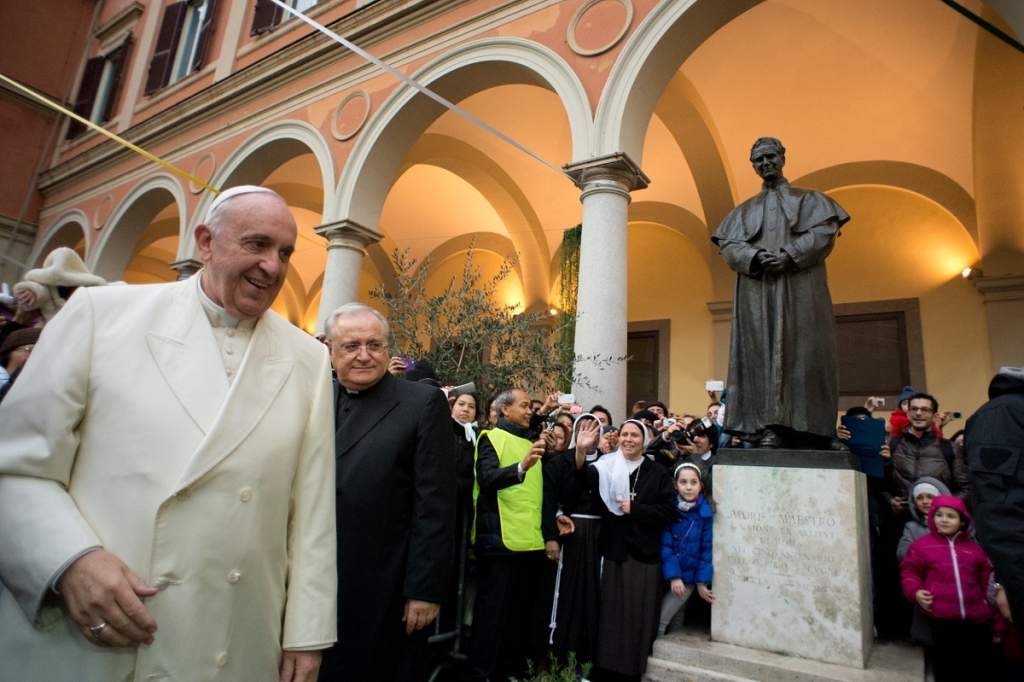
From a Salesian perspective, the 2014 visit reveals a profound consonance between Pope Francis’ pastoral vision and the charism of Don Bosco. Sacro Cuore—historically linked to Don Bosco’s final Roman mission—today lives its fidelity not only in memory but in mission: Italian language courses, vocational pathways, hospitality, and accompaniment for migrants and the homeless around Termini.
Francis’ presence publicly affirmed this work. By meeting migrants, homeless persons, and volunteers together, he highlighted the mutual enrichment that occurs when young refugees and local youth serve side by side. The parish becomes not merely a service provider but a laboratory of communion.
In choosing Sacro Cuore on the World Day of Migrants and Refugees, the Pope offered more than a pastoral visit; he enacted an ecclesiology. The Church is not a “besieged citadel” but a welcoming home. She is strongest when she resembles the Lamb: meek, close to the little ones, near to the poor.
The Lamb at the Periphery
The 19 January 2014 visit stands as an early, luminous synthesis of Francis’ pontificate: Christ-centered preaching, concrete mercy, and a preferential closeness to migrants and the marginalized. In a Salesian parish at Rome’s crossroads, the Bishop of Rome made visible a Church that goes forth.
“Behold, the Lamb of God.” In Sacro Cuore that day, the proclamation was not only heard from the ambo; it was embodied in gestures of welcome, in shared prayer, and in a renewed confidence that the meek and good Lord walks with his people—especially those on the road.
https://www.infoans.org/en/sections/news/item/27107-rmg-at-the-heart-of-rome-s-periphery-pope-francis-at-sacro-cuore#sigProId6469590e3f