
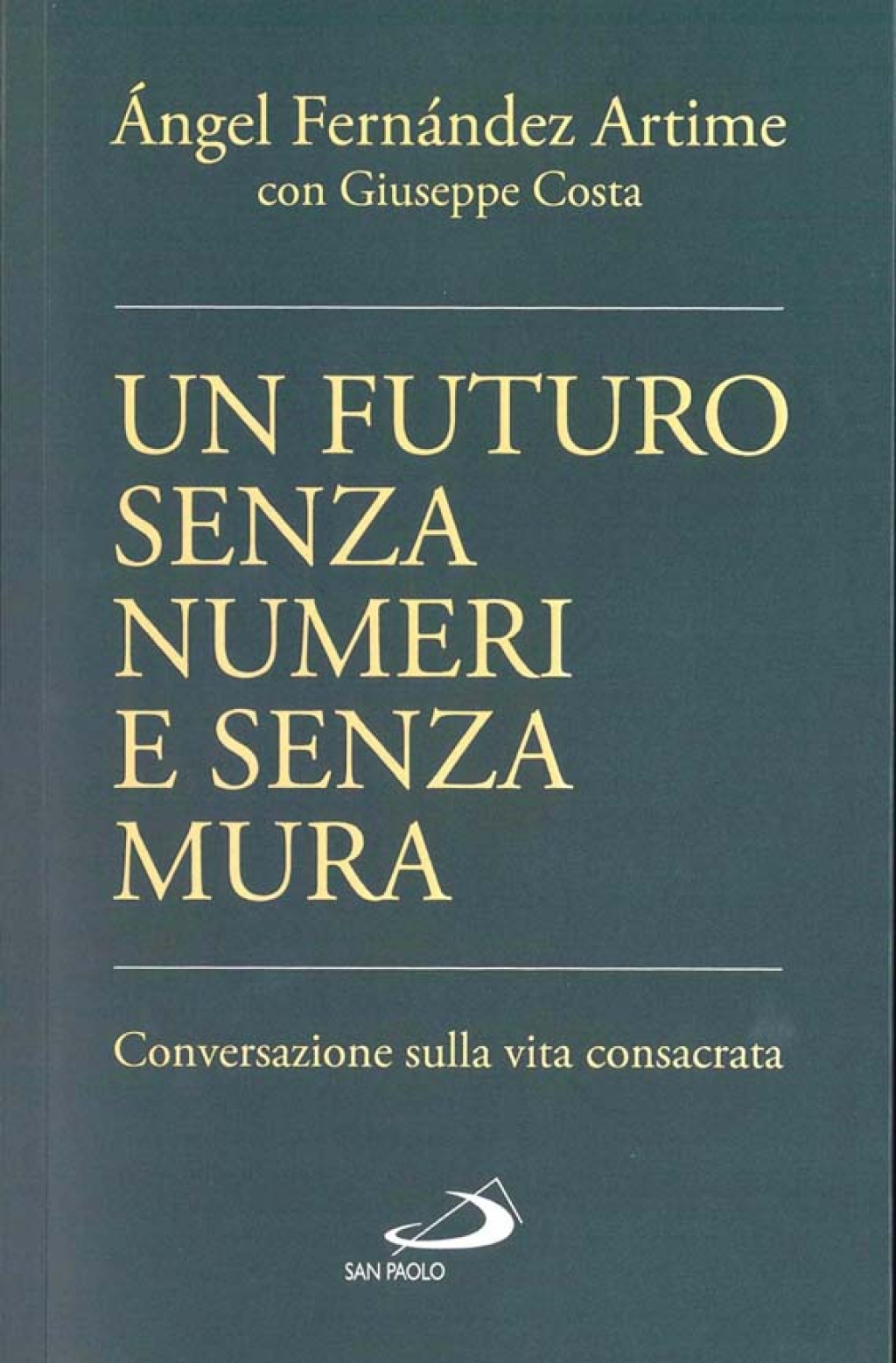
In a frank and sincere dialogue, they address all the issues linked to the present and future of religious life: the inexorable decline in vocations, especially in the West; the quality of formation; the difficulties in living and bearing witness to fraternal life; fidelity to the original charism amidst apostolic activities to be carried forward and significant economic difficulties… These are all problems that point to an evident fragility.
But, the authors note, consecrated life can be reborn precisely from the fragility it is experiencing in so many respects. However, we must not continue to identify religious life solely with the social function it has performed in the past: not only is this a mistake, but it is also a source of pessimism and a barrier to any possibility of change and transformation.
Consecrated life is more necessary than ever in the Church today: yet we must have the courage to free ourselves from the anxiety and worry of a future without numbers and without walls. Religious life is not what one does, but what one is: signs of God’s presence in the world, “metaphors of God’s love”.
“The future of Consecrated Life, which I deeply believe will continue to exist, because it is the Spirit of God, and not us, that sustains it, does not depend on numbers, nor on the walls and structures already built that we think we must preserve at all costs… Consecrated Life does not exist, nor will it exist, without men and women who are deeply faithful, authentically self-emptied, and surrendered to God,” states the Salesian Cardinal Fernández Artime.
“Today, religious life is more necessary than ever, but it needs, more than ever, to rediscover its love and fascination for the Lord Jesus, placing him at the centre of our lives and deep within our hearts,” adds the Pro-Prefect of the DICLSAL, according to whom “continuing to identify consecrated life solely with the social role it plays (in schools, hospitals, or social welfare institutions) is not merely a mistake: it is also a source of pessimism, nostalgia for the past, and a refusal to consider any possibility of change and transformation.”
In both seminaries and in parishes there is “far less maturity than one might suppose”, the cardinal boldly states: “Basic spiritual and doctrinal formation is no longer sufficient. There is an ever-greater need for human, emotional, psychological and cultural preparation, enabling dialogue with the world and a response to social challenges.”
Authenticity, human and spiritual maturity, holistic preparation, cultural openness and prophetic courage are the necessary requirements to respond to the crisis of vocations, in an age when young people demand, above all, consistency between what is proclaimed and lived experience. They must be made to understand that consecrated life “is not a mutilation of oneself, but a realisation of one’s true self, transformed, however, by a passion for the Lord, working on oneself with the grace that only God gives, drawing from the sources of an authentic charism recognised by the Church, a spirituality, a mission and even a community.”
The book-length interview also includes sections dedicated to abuse, with a clear acceptance of responsibility, in line with the stance taken by recent popes: “Even a single case is so serious as to be unforgivable and unjustifiable”.
The picture that emerges from the volume is, in short, that of a consecrated life characterised, both today and for the future, by a strong prophetic dimension: “In a world that is in many ways marked by indifference and fragmentation, communities that live in true fraternity are a visible sign of unity, encounter, communion and reconciliation. The witness of communal fraternity demonstrates that another way of thinking is possible, distinct from that of domination, selfishness and the absolute pursuit of power and wealth”.
It is the “evangelical counter-culture” that Cardinal Fernández Artime describes, drawing on his own religious vocation: “Don Bosco used to say to young people: ‘I feel at home with you’. And even today, the same thing happens to me”.
With the contribution of Maria Michela Nicolais, for AgenSir
