
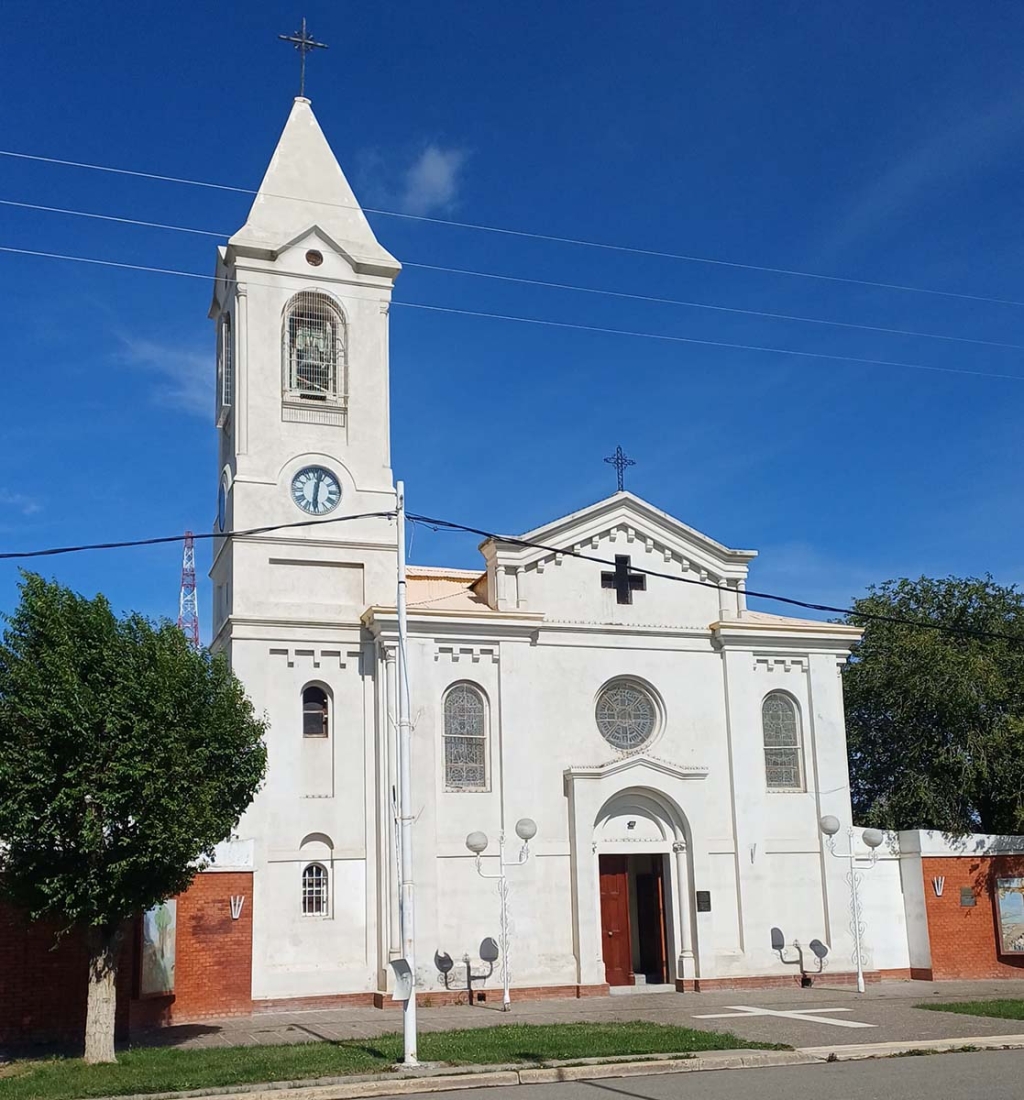
A Clock That Crossed the Ocean
The film recounts the story of a tower clock commissioned by the Salesian missionary Fr. Federico Torre—a legendary missionary figure to whom one of the most important peaks in South America is dedicated—which was shipped in 1934 from the Bergallo workshop in Bardino Nuovo, a hamlet of Tovo San Giacomo. The clock traveled more than 12,000 kilometers by sea and, after several weeks, reached the Salesian mission of Puerto Santa Cruz in Argentine Patagonia, where it was rediscovered a few years ago still installed and functioning on the bell tower of the Church of the Exaltation of the Holy Cross.
The documentary focuses on the research, tracing, and recovery of this clock, retracing the extraordinary cultural encounter between Italy—particularly the Liguria region—and Argentina, between Tovo San Giacomo and Puerto Santa Cruz. It offers multiple perspectives, including that of Italian craftsmanship around the world and the epic Salesian missionary experience in Latin America.
A Symbolic Screening in a Year of Anniversaries
The screening in South America coincides with the 125th anniversary of the Asociación Genovesa Argentina Carboneros Unidos, founded by Ligurian emigrants in Buenos Aires and still active today, and comes almost as a conclusion to the 150th anniversary of the First Salesian Missionary Expedition, celebrated by the entire Salesian Family in 2025.
After its premiere in Buenos Aires, the documentary will be shown on Thursday, March 5, at the municipal multipurpose hall in Puerto Santa Cruz, during an institutional visit carried out in collaboration with the Municipality and the Parish.
On this occasion, a new electric tower clock mechanism will be presented as a gift to the community of Puerto Santa Cruz. It has been donated by ECAT Orologi, a company specialized in the production of tower clocks and bells, which had also contributed to the creation of the first Italian-language documentary on the history of the Bergallo clock.
A Project Linking Liguria and Argentina
Alongside the Mayor of Tovo San Giacomo, Alessandro Oddo, and a group of Ligurian citizens, those present in Argentina will include director Alessandro Beltrame and Giorgio Bonfiglio, one of the authors of El tiempo al otro lado del Océano. Their aim is not only to document these moments but also to gather new testimonies and materials for a second documentary that will form part of the next phase of the project “Liguria Argentina: Italian Ingenuity in the World,” promoted and supported by the Liguria Region through its Department for Emigration.
“This project extraordinarily represents what it means to be Ligurian in the world,” stated Regional Councillor for Emigration Paolo Ripamonti. “It is not just the story of a clock, but a concrete account of the ingenuity, craftsmanship, and vision of our territories, which already in the 1930s crossed the ocean to bring Italian skills and quality as far as Patagonia.”
He concluded: “We firmly supported this initiative because it enhances a living memory made of work, courage, and identity. Liguria may be small in size, but it is great in talent and capacity. Telling stories like that of the Bergallo clock means reminding the world that our craftsmanship continues to travel far, carrying with it pride, tradition, and innovation.”
On November 14, 2025, during the celebrations for the 150th anniversary of the First Salesian Missionary Expedition—which departed precisely from Genoa, capital of Liguria—Fr. Fabio Attard, Rector Major of the Salesians of Don Bosco, visited the Museo Nazionale dell’Emigrazione Italiana in Genoa for an event commemorating Fr. Lorenzo Massa, a Salesian priest born in Argentina to parents of Ligurian origin. On that occasion, the Rector Major observed: “It is interesting to note how this emigration brought with it a rich cultural, agricultural, artistic, and artisanal heritage… It generated people of remarkable stature, with educational and human experiences that we can still appreciate today.”

