
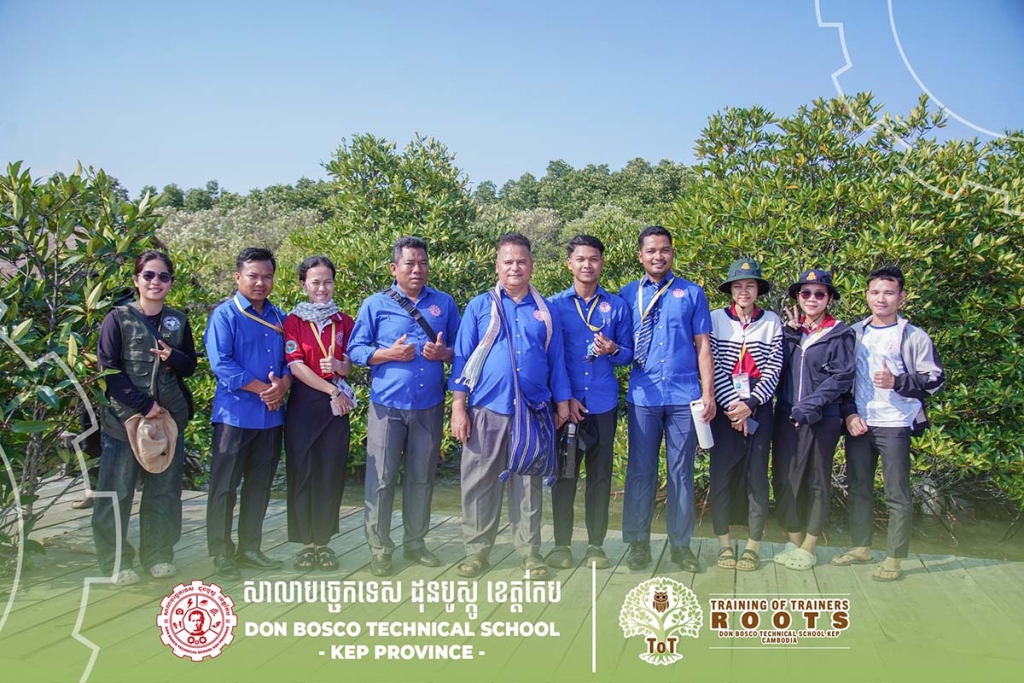
The workshop combined reflection, environmental awareness, and cultural immersion. Students visited the Kampong Samaki Community Fishery and the Mangrove Biological Learning Center in Kampot Province, where local communities have long worked to protect mangrove ecosystems and promote sustainable livelihoods. These visits offered practical insight into community-led environmental conservation and resilience.
A central theme of the workshop was the preservation of Cambodia’s ancestral traditions amid rapid urbanization. Students reflected on the cultural richness of Indigenous groups, the empowerment of women, and the value of strong community life. A key concern emerged: if young people migrate permanently to cities for study and employment, ancestral heritage and village identity risk being weakened or lost.
Through group dialogue, participants emphasized that modern development must not erase cultural roots. “If we are the result of centuries of ancestral journeys, then our descendants also have the right to a cultural identity,” one group reflected. Rather than rejecting modernity, students proposed a balanced approach. Technology, they noted, is also a fruit of human wisdom. The challenge lies not in abandoning it, but in ensuring it strengthens rather than fragments communities. Access to electricity, internet, and education is essential for rural development; however, it must serve human dignity and social cohesion.
Environmental stewardship emerged as another strong commitment. Students stressed that care for forests, seas, rivers, and mangroves is not optional but vital for survival and well-being. They challenged passive attitudes toward environmental destruction. “If we see the forest being destroyed and do nothing, we are part of the destruction. If they cut one tree, we must plant seven,” a participant declared.
Don Bosco Kep itself stands as a model of sustainability, surrounded by trees and engaged in ongoing ecological initiatives. For the past two years, students have committed to planting 5,000 trees annually. With 500 students planting at least ten trees each in their villages, they aim to make a tangible contribution to Cambodia’s environmental future. The school is also an active member of the Don Bosco Green Alliance Cambodia, collaborating with the Kep Provincial Department of Forestry and Environment to protect mangrove areas and Kep National Park.
The workshop also highlighted the traditional Cambodian village model, where strong kinship bonds foster unity and shared responsibility. Participants reflected on the importance of dialogue, conflict resolution, and mutual respect in a culturally diverse society that includes Indigenous minorities and various religious communities. “We are an oasis of peace,” the youth affirmed, calling for dignified dialogue and protection of the most vulnerable.
At Kampong Samaki Community Fishery, local elders shared their decades-long struggle to defend mangrove forests from destruction. Despite threats, they organized and eventually secured government support for environmental protection. “We’re not doing this for money,” one elder explained. “We need to work with nature. She gives us everything.”
The ToT workshop concluded with cultural expressions, including a traditional pradal exhibition symbolizing resilience and a Jarai blessing dance for nature. The experience strengthened participants’ resolve to unite ancestral wisdom, environmental responsibility, and modern development in building sustainable communities for the future.
